Insights
Psychology of Communications
We explore the Psychology of Communications - the first of three parts on how the principles of psychology can be a powerful tool for creating copy, content and campaign strategy - starting with informative communications.
Psychology is everywhere. The principles of understanding human behaviour - how people think, how people perceive the world, how they learn, what motivates them, what they are adverse to – can be applied to many aspects of life. But this is particularly pertinent to communications and marketing. Psychology shapes our everyday choices, so it should be considered in anything we create – how we write, how we design, how we sell, how we inform.
It’s not about reading people’s minds, it’s about taking a step back and considering how people might consume information, and what drives them forward. Over the next few months I will explore what this actually means through three different common comms challenges, starting with Informative Communications.
Informative communications
Here I’m talking about factual information about your organisation or things your audience needs to know. This isn’t always the most exciting form of communications, but it can be, arguably, the most important to get right.
In my final year at university, I conducted my own research investigating how non-invasive prenatal testing (NIPT) for Down Syndrome was communicated online, and how this may influence decision-making in parents. Information online has been shown to influence decision making (particularly in pregnancy), and therefore has a duty to be clear and easy to understand. Health information must be unbiased and unpersuasive, allowing people to come to their own decisions and easily access medical advice. What I found was quite the opposite.
If you’re interested.. I found, out of the top 10 pages analysed, 72.54% of words describing the NIPT were positive – accuracy, safety and usefulness were most often referenced - with far less descriptors of the test’s limitations. Words describing Down Syndrome were negative. And there was little to no encouragement for parents to seek further advice.
I also found the way information was written was way too complex. Health materials should not exceed a Flesch-Kincaid readability grade level of 6, these articles were all between 9.3 and 19. As the average reading age in the UK is that of a 9-year-old (grade 8), this means that the content was incredibly exclusionary.
Overall this suggested that the webpages were written to be persuasive and could be considered as misleading - potentially leading parents to undergo NIPT without appreciating its limitations, and without seeking advice from health professionals - as well as being overwhelming and hard to read through.
Use plain English
“It's not dumbing down, it's opening up.” Lorena Sutherland, content lead for Office of the Public Guardian on GOV.UK.
Using language that is clear, accessible and available to anyone who wants to read it, means that you avoid excluding people based on their education or ability. Content Design London’s Sarah Winter sets this out really clearly, and I would really recommend reading her book - particularly the section on the science of reading – if you’re interested in this topic.
This means avoiding jargon and acronyms – commonplace in the environment and sustainability sectors, and can be tricky to avoid at times - and write copy without assuming knowledge.
Even if people can read to a higher level, and do have a good knowledge of the topic, your copy will be easier to read if it is more straightforward and uses simpler language. This is because shorter, less complex, frequently used words are quicker to identify than longer, less commonly used words. When plain English is used, even the most knowledgeable people are more likely to stay engaged. So, at the end of the day, there’s no harm in using a simpler version of a word if there’s the option to.
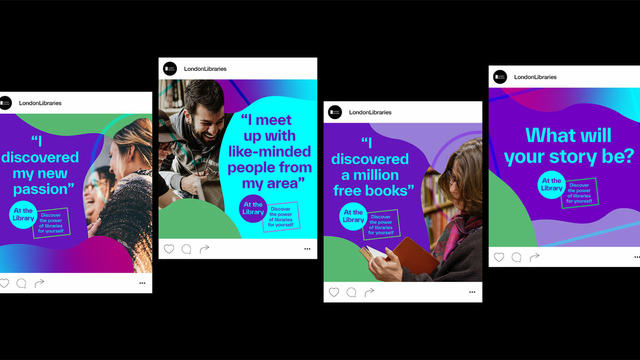
It’s something we do a lot at Creative Concern. From demystifying the wonders of peatlands for North Somerset Council, to explaining the latest renewable and sustainable technologies being funded by InnovateUK, getting complex ideas across in ways that everyone can engage with is really important to us… and our clients.
Consider reading patterns
People like to scan through text, rarely reading word-for-word. This means that the way text is written should be easy to navigate, use lists and headings to break up text and help people to scan and find what they are looking for.
When scanning through website content, people read in an F shape across the page. The first line of text is read most intently, then people skip through to the second bar - with slightly less focus. Then the further down the page, people drop off. With this in mind:
- Left align text: If the text is longer than three lines long, always left align it. Centralised text can be a design choice for shorter, less critical information. If in doubt, just left-align it.
- Front-load content: Place the most important information at the top of the page and in headlines to be seen first.
- Use clear subheadings: Break up text with subheadings to create more horizontal scanning opportunities and guide the user's eye down the page. Make sure the first few words capture people’s attention.
- Keep it concise: Write clear and concise copy, as users often miss details placed outside the main F-pattern focus area.
For more visual content, people can also read in a Z-pattern - pick which one is most suited to the content you’re creating.
If you’re looking to equip your team with more writing tips, get in touch. At Creative Concern we’ve developed a copywriting training day - Write or Wrong, designed to boost confidence and consistency in writing, language and tone of voice, with practical tools to write in an inclusive and creative way.