Insights
Behaviour change communications
In this next instalment, Senior Account Manager Cheyenne Colbert delves deeper into the Psychology of Communications with a focus on behaviour change communications.
Behaviour change isn’t simply about telling people what to do - it is about creating the right conditions for people to make informed, confident choices. Psychology provides a useful framework for this, because behaviour is shaped far more by people’s environment, emotions and cognition than by information alone. When we understand these drivers, communication becomes genuinely powerful.
A good starting point is the COM-B model, which reminds us that people can only change their behaviour when they have the capability, opportunity and motivation to do so. Communications play a direct role in all three: ensuring people understand what’s being asked of them (capability), signposting practical support or removing barriers (opportunity), and showing the benefits or personal relevance behind the action (motivation). When one of these components is missing, behaviour rarely shifts.
Here are a few more tips on how to implement behavioural change techniques to shift hearts, minds and encourage action.
Make it relevant.
Different people have different values, goals, barriers and challenges. So it’s important to learn about your audience, who you are targeting, what motivates them and how best to reach them, so that you can create audience segments, tailor your messaging and target them accordingly.
Framing your messaging effectively is critical here, as people are more likely to be receptive if something resonates with them. This will help to build up a relationship and trust over time, as well as lead to your desired action.
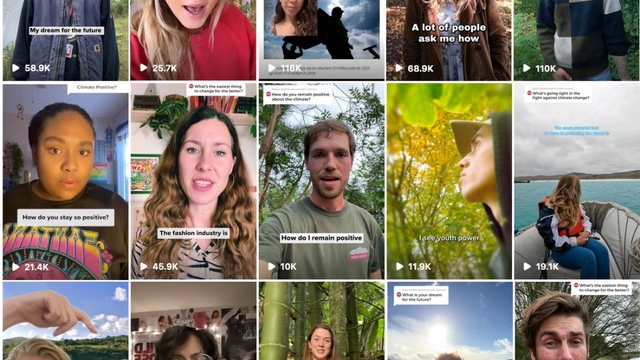
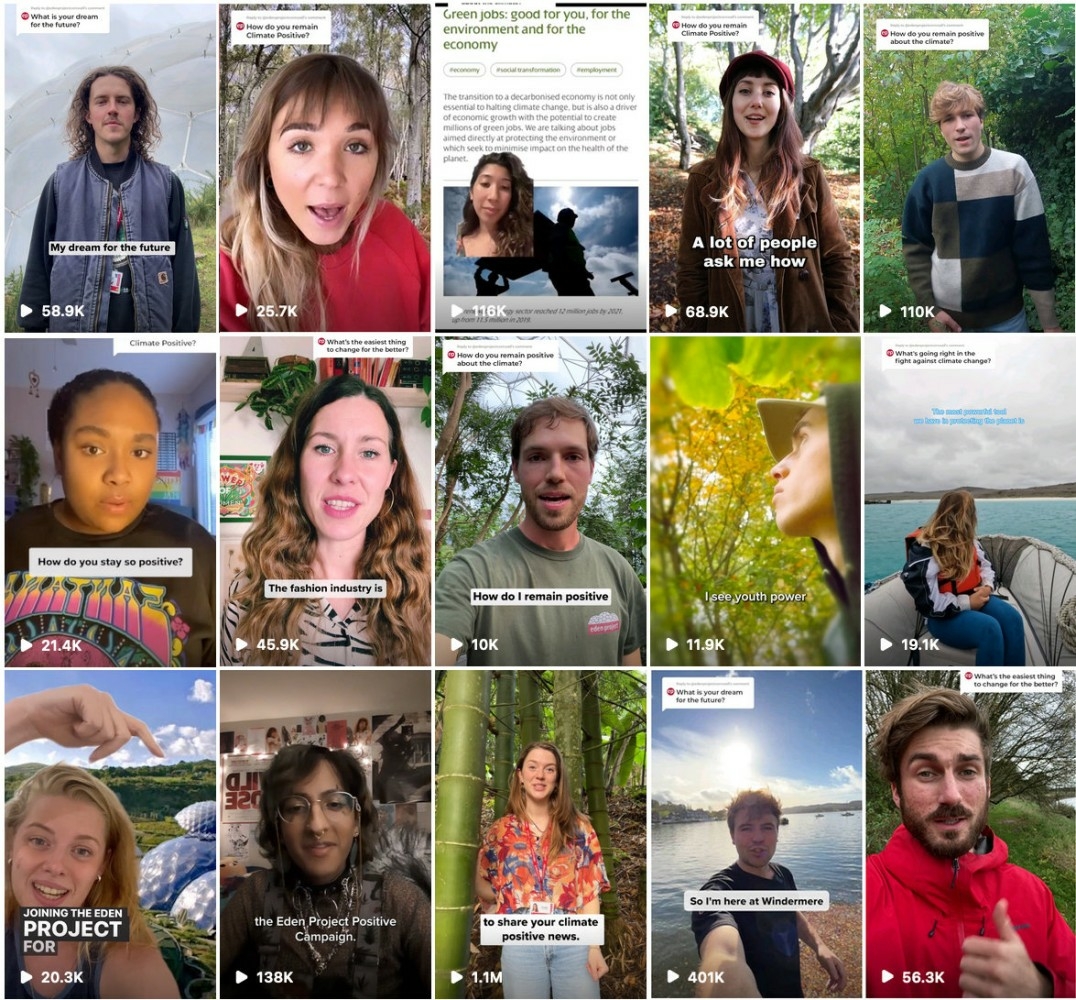
An example from the studio: The Eden Project: Spreading climate positivity
We worked with the Eden Project on a campaign to encourage 16-25 year olds to help the planet and boost their understanding of collective action. Based on a series of workshops with young people to define the strategy, we worked with a fantastic and inspiring group of young people campaigning in areas such as sustainable fashion, marine biology, freshwater ecology, plastic pollution, climate anxiety and climate justice.
The result was a series of films and social content promoted across Instagram and TikTok. The campaign gained 3.1 million video views, reached a total audience of over 8.5 million people. The campaign generated over 69,000 clicks and over 62,000 reactions.
Make it social.
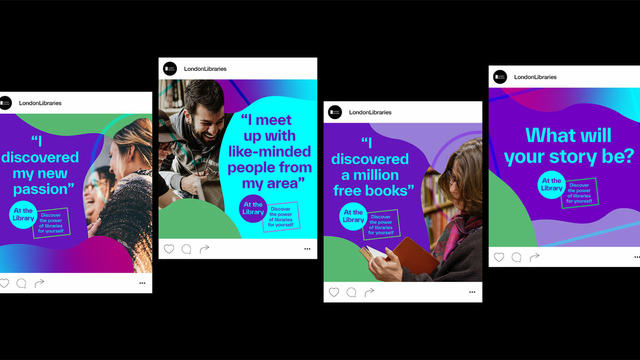
Humans have evolved to follow the norm - carrying out actions that their friends, family or colleagues take - to ensure safety, cooperation, strengthen community bonds and reduce risk of conflict.
This means that people are more receptive when an action feels like “something someone like me would do”. Creating this sense of relatability - through your messaging tone, photography, and storytelling - makes the desired behaviour feel not only practically achievable, but something that people just should be doing already.
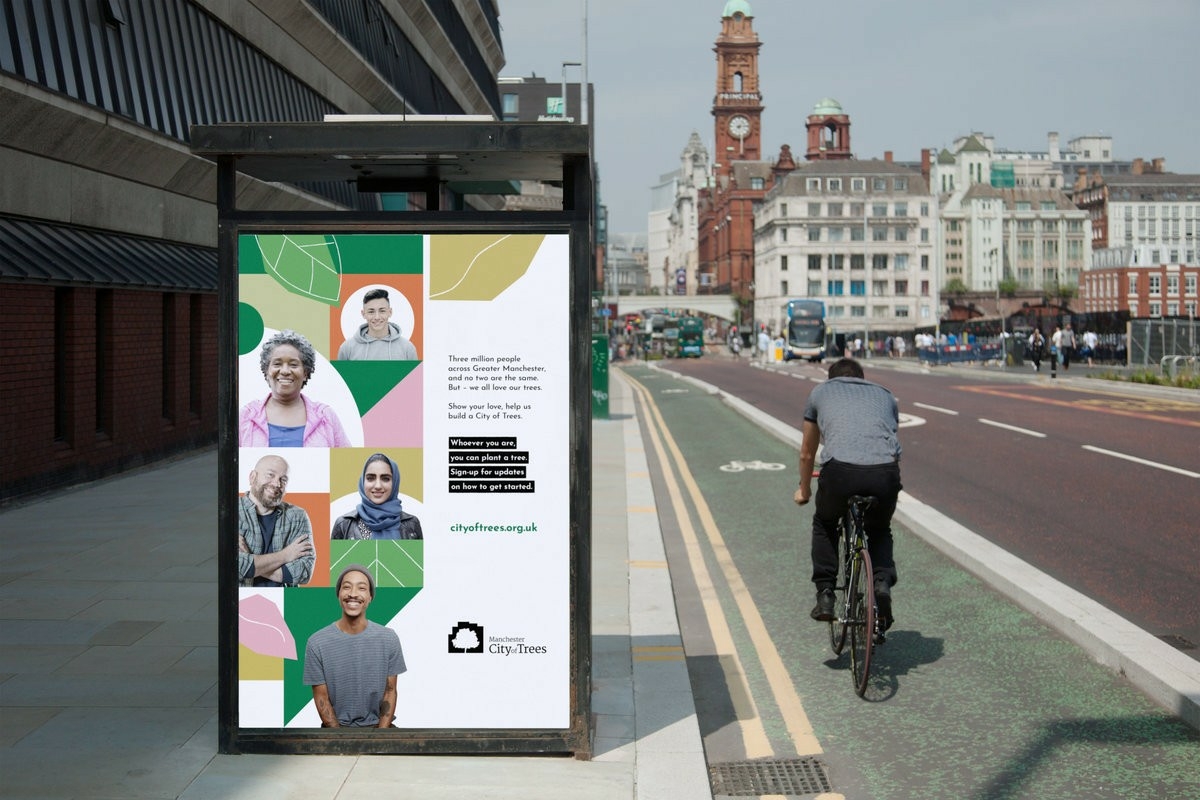
An example from the studio: City of Trees: You can plant a tree
Coinciding with National Tree Week, City of Trees wanted to celebrate their current supporters and encourage any non-members to sign-up and get involved with their important climate change movement.
The key message behind this campaign was that caring for the climate is for everyone, not just for a specific demographic of 'people in wellies'. Whoever you are, you can plant a tree and do something amazing for the environment.
Create nudges.
Behavioural science also tells us that most decisions are made quickly and automatically - relying on mental shortcuts, past actions and intuition. This is where nudge theory is useful - small suggestions that can influence people’s decision making in a different direction - things like:
- Making the action the default, or the easiest one to take.
- Simplifying steps to achieve the goal.
- Making it the social norm by highlighting what others are doing.
For example: “97% of your neighbours compost their food! Here’s how you can too..”
Reduce cognitive load
Critically, effective behaviour-change content - messages, designs - require a minimal amount of cognitive load to absorb.
People are busy and often overwhelmed with information all the time, so the more mental effort it takes to interpret a message, the less likely they are to act on it. Breaking tasks into small steps, presenting information visually, and stripping out unnecessary detail, helps shift a behaviour from something that feels difficult to something that feels doable. Use clear, jargon-free language to ensure the message is easy to understand and actionable.
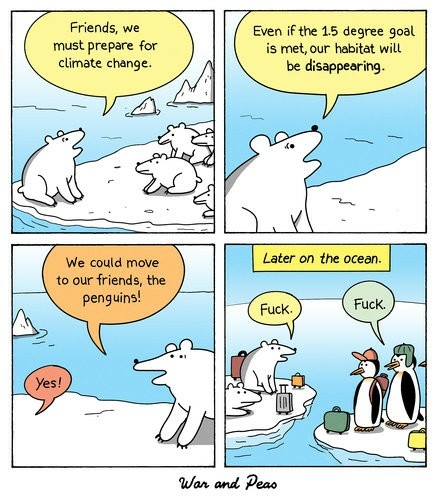
An example from the studio: CONSTRAIN Climate Comics
Many behaviour change campaigns involve communicating big complex issues down into something that will make people take notice, feel something and act. In this project, the worlds of research, science and comics were brought together to deliver a powerful message about climate change. We worked with three comic artists to collaborate with the CONSTRAIN project, a consortium of 14 European partners tasked with improving near-term climate projections.They created comics designed to reach a wide audience, beyond the scientific community, to spread the word about the impacts of climate change.
The comics gained huge momentum on social media with over 88,000 tracked engagements and an audience reach of over 620,000. The comics generated hundreds of additional shares across social media accounts that could not be tracked. Our conservative estimates are that the comics reached 1.5 million accounts, with 100,000 active engagements.